Why is this important?
Part 1: Our Machines
Every day, our lives become more and more online. With big tech companies showing no interest in wanting to make any effort into improving the world, it has become increasingly important to take control of your online activity, not be at the will of corporations, and stay private and secure online. With the amount of money, power, and influence corporations have within society and the government, it's nearly impossible for them to be "good". Stop giving them your time, money, energy, and clicks. Like Google's former motto said, don't be evil. Here are some of the most egregious and disturbing instances of corporations doing what they do best: making the world a worse place. This is not an all encompassing list, it is simply some examples/a cautionary tale as to what happens when greedy groups, people, and systems have too much power. Just because a specific group isn't mentioned doesn't mean they're innocent, and just because a specific issue isn't mentioned doesn't mean that I don't believe that it is important.
"Total disassociation, fully out your mindGoogling "derealization", hating what you find
That unapparent summer air in early fall
The quiet comprehending of the ending of it all"
- Bo Burnham, artist, from That Funny Feeling off of Inside (Burnham)
Pollution

- Greta Thunberg, referring to capitalism, from her book "The Climate Book" (Thunberg)
Climate change continues to make our world hotter, raise the sea levels, destroy entire countries, make our weather more extreme, threaten food supplies, destroy habitats, risk the deaths of billions, and lead society to it's end, while we do little to stop it (Union of Concerned Scientists, Ripple et al., Pearce and Parncutt). We are heating the planet at the rate of dropping the nuclear bomb used on Hiroshima twelve times every single second (Mulhern, Pan et al.). Rising heat kills one person per minute (Carrington). Just 100 companies are responsible for 70% of emissions and just 32 are responsible for half (Riley, Carrington). Billionaires emit more carbon pollution in 90 minutes than the average person does in an entire lifetime (Thériault). We are on track for multiple countries to disappear, over a million species to be extinct, and over a billion human deaths. If we continue at that pace, then we reach over four billion human deaths, a third of all species extinct, and societal collapse within the next 25 years. It's planetary suicide. For more info, facts, and sources, see my blog post.
"What's good for prosperity is bad for the environment."- Bill Gates, co-founder and current technical advisor of Microsoft - whose company's revenue grew almost 200% while their emissions grew almost 25% from 2020 to 2025 - who thinks climate change does not pose an existential threat to humanity, and who is named in the Epstein Files (Gates)
Industries like big tech have a unending desire to destroy our planet and everything on it with their inaction on the climate. Big tech specifically accounts for 2 to 3 percent of the world's emissions (Navarro). Despite already lying about their impacts on the environment, companies like Google and Microsoft continue to soar past their environmental goals (Turek, St. John, Microsoft). Google, Microsoft, Amazon, and more with with and help big oil (Reuters, Cole, Matthews, Merchant, Merchant). Even a company like Apple who markets themselves as environmentally conscious continues to release pointless revisions to their products that will inevitably become e-waste year after year and constantly show themselves to be against the right to repair, something that reduces waste and improves usability significantly (Dayaram). This has only gotten exponentially worse with the advent of AI (St. John). Data centers that pollute both the local and global environments continue to pop up at a rapidly increasing pace all across the world, making the air and water unbreathable and unusable while bringing our world and every species on it closer to a climate catastrophe (Abraham). Communities with data centers in unceded Native American lands and in places like Memphis, Tennessee and Newton County, Georgia have non-potable water, unbreathable air, and loud sounds (Goodman and Two Bulls, Harris et al., Tan). Companies hide their abuse of local water infrastructure while residents suffer (Skibell).
See also: Anthropocene
"And if we can't all agree at the bare minimum that a giant comet the size of Mount Everest, hurtling its way towards planet Earth is not a fucking good thing, then what the hell happened to us?"- Leonardo DiCaprio's character, Dr. Randall Mindy, in the climate change allegory film Don't Look Up (McKay)
Genocide
 "I hear your protest, thank you."
- Mustafa Suleyman, CEO of Microsoft's AI division - which still actively arms the Israeli government in their genocide - responding to a now fired pro-Palestinian worker (Singh)
In the last few years alone, Israel's genocide across occupied Palestine has taken the lives of over 70,000 people, including over 20,000 children, over 240 journalists, and over 1,700 healthcare workers (UN, Graham-Harrison, UN, MAP). That amounts to over one child every hour, or 28 daily (Save the Children, UNICEF). Hundreds of dedicated attacks have been carried out on healthcare facilities - 464 as of June of 2024, 94 within the first week alone (Goodman and González, Dunn). Gaza is home to the highest number of children with amputated limbs per capita (UNRWA). Now it extends past Palestine - into what Israel wants to be Greater Israel - into Lebanon and Iran, where the death toll continues to rise into the thousands (Christou, AlJoud and Chehayeb, Brangham and Wilde). The Israeli government has a strategy known as the Samson Option - in which they would release nukes upon the world if Israel faces existential threat or is destroyed.
Google and Amazon have a deal with the Israeli government called Project Nimbus in which they provide cloud computing services, including artificial intelligence and machine learning, to assist the Zionist regime in its genocide (Roscoe). Google helped air ads promoting Israeli settlements and misinformation on the blockade induced famine in Gaza (Poulson and Fang, Wood). Microsoft provides their cloud computing platform Azure to the IDF and has cancelled the email address of International Criminal Court prosecutor Karim Ahmad Khan for his official investigative work on Israel's war crimes (Mednick et al., Quell). Google and Microsoft fire workers for their opposition and activism towards ending their company's support of the Palestinian genocide (Kerr, O'Brien). Palestinians are rejected access to Paypal, even when their Israeli neighbors can use the service (York, Butcher). Facebook helped to propagate the Rohingya genocide in Myanmar and helps to propagate the Gaza genocide by allowing ads and crowdfunding for IDF drones and illegal Israeli settlements (Bhuiyan, Wood).
Militaries
 "I always think it's hard because where the critics are right is what we do is morally complex. If you're supporting the West with products that are used at war, you can't pretend that there's a simple answer."
- Alex Karp, co-founder of US and Israeli government contracted surveillance database tech company Palantir that works with other big tech companies like Amazon, Microsoft, and NVIDIA, who thinks war crimes should be legalized as they'd be good for business (Dowd)
Groups including Google, Palantir, Amazon, and formerly Anthropic work with the US Department of Defense/War under Project Maven, in which they provide cloud computing services, including artificial intelligence and machine learning to them (Griffiths, Jeans and Stone). Google has repeatedly partnered with the US government, including the military and ICE, in order to "get their work done" (Google, Cox, Gault). Said work includes using our tax dollars to torture (like at Abu Ghraib Prison), kill civilians (like the 4.5 million killed in West Asian countries), interfere in elections, genocide natives, coup countries, and more while we reap the benefits of repossessing their oil and other resources: US imperialism (Wikipedia, Wikipedia, Wikipedia, Priya, Brown University). Additionally, the US military is the largest institutional emitter of greenhouse gasses (Thombs et al.). They partner with multiple military tech companies, including Palantir and Lockheed Martin (Google, No Tech For Apartheid). Microsoft also works with the US Military and ICE, including the same software they lease to Israel (Wong, Microsoft). Even streaming services like Spotify participate in the military-industrial complex by showing ICE recruitment ads to their users (Mier). Platforms like Twitter/X and Instagram allow genocidal militaries like the Rapid Support Forces in Sudan and the Israel Defense Forces to have a presence on their platforms, enabling them to bolster support abroad (Mahdi and Hiebert, Twitter/X).
Lobbying
.jpg "Image of Meta's Mark Zuckerberg, Amazon's Jeff Bezos, Google's Pichai Sundararajan, and Elon Musk standing almost immediately behind Donald Trump during his second inauguration")
- Katie Harbath - former director of public policy for global elections at Meta, social media legislation advisor, Founder and CEO of social media legislation consulting firm Anchor Change - despite the fact that people are growing less comfortable with AI in society (Bosa and Wu)
Tech companies are some of the biggest lobbyists out there. Google ($16,540,000 in 2025), Amazon ($18,865,000 in 2025), Microsoft ($10,105,000 in 2025), Apple ($10,000,000 in 2025), and more are all among the companies who have given the most amount of money to US politicians through PACs and other means to have their interests represented in the government over the politician's own constituents (OpenSecrets). Former president Joe Biden received $13.5 million in 2020 from internet industry contributors before he won the presidential election (OpenSecrets). OpenAI is supporting a bill that would shield AI labs from liability over the deaths of hundreds of people (Zeff). Meta has spent over 2 billion dollars towards getting ID verification laws on the books (Costa). OpenAI co-founder and president Greg Brockman was a top donor of president Donald Trump (Council, Zeff). This results in more corrupt system where money holds the power rather than the people (Nazur). This is a problem across US party lines; neither party serves anyone other than greed (Integrity Index).
Additionally, big tech companies are big culprits of tax avoidance. Over ten years, Apple, Alphabet, Amazon, Meta, Microsoft, and Netflix avoided over $270 billion in US taxes (Butler). In the first quarter of 2026, Meta had an effective negative 23% tax rate - as in they got more money then they paid (Fool). Their CEOs publicly cozied up to Donald Trump in order to receive tax benefits in the Big Beautiful Bill (Wamhoff and Gradner, Gardner).
Privacy

- Larry Ellison, co-founder and current CTO/executive chairman of the company Oracle - partial owner of TikTok in the US, maintainer of the Java programming language, and owner of a large amount of all corporate infrastructure - who is the 6th richest person, owner of an entire island of Hawai'i, father of the founder and CEO of Paramount Skydance - which will soon also own Warner Bros. Discovery - and friend of the Israeli Military, who offered a board seat at his company to Benjamin Netanyahu (Ma)
As we spend more time online, it is becoming increasingly crucial to maintain a sense of internet privacy. Privacy is important as it can increase your digital security, prevent governments and companies from knowing more about you than you do about yourself, increase your control over your devices, and more (National Cybersecurity Alliance, Aragon et al). Think about all the times you've gotten ads served to you about things you were suspiciously just searching up on an unrelated platform or were talking about with a friend. I can say with almost 100% certainty that somewhere out on the internet (possibly including the dark or deep web) that your information is being made available by hackers, leakers, or other malicious entities. It is a misconception that wanting to increase your internet privacy means you "have something to hide". If you have nothing to hide, would it not worry you if there was a camera in your bedroom (or your street), watching your every move? It is perfectly reasonable to not want actors who have no business knowing about you to not know about you (Aragon et al).
With that being said, nothing you do in the internet age using products by big business is private. All of your information is tracked and used to serve ads (Graham and Elias). Google, Microsoft, Meta, and Apple routinely coordinate with the National Security Agency (NSA) (Gleenwald and MacAskill). Apple's next AirPod model will have cameras embedded in them, which definitely won't be used to spy on people (Peters). Recently, the United States federal government has been buying and subpoenaing this data to spy into the lives of it's citizens (ACLU, Whittaker, Moon). Within the past decade, there has been a 770% increase in user data requests to big tech from the US government (Nazzaro). Even people living in countries other than the US aren't safe from the DHS demanding big tech to hand over your data (Varner). Meta waited to launch facial recognition in their camera glasses until the political environment was in a place where the "civil society groups that [they] would expect to attack [them] would have their resources focused on other concerns" (Hill et al.). There's too many privacy issues to even begin to list for each of these companies, to the point where Google and Meta each have a Wikipedia page dedicated to their privacy issues. (Wikipedia, Wikipedia, Wikipedia, Wikipedia). Because of this, it is crucial you find more private alternatives while being aware of privacy in general (which will be covered on this site).
All that data they collect about us is also at risk of being leaked, hacked, or sold. Any service you use collects data about you to sell to advertisers and governments. Both the services and advertisers are at risk of data breaches. For example, a big ad company called Gravy Analytics recently had a massive data breach that exposed millions of users (possibly including you). Gravy and companies like them already sell the information they gather about you to various sources, like location data to the US government - including ICE (Cox, Whittaker).
Labor
 "You don't really believe the peeing in bottles thing, do you? If that were true, nobody would work for us."
- The official news account of Amazon, whose workers do pee in bottles while on the job to reach quotes, replying to a United States representative on Twitter/X (Klippenstein)
Google, Apple, Tesla, Microsoft, Dell, Samsung, Sony, and more have all been accused of utilizing child labor (Mosebo). Meta uses data generated by their workers to train their AI models (Paul and Horwitz). Companies including Amazon, Meta, Apple, and much more are known for their poor treatment of their workers and the subsequent unions (Wikipedia, Wikipedia, Wikipedia). Amazon workers pee in bottles while on the job in order to reach quotas, which the company originally attempted to deny before admitting it was true (Klippenstein). An Amazon worker died on the job, and their coworkers were told to just continue to work around the body (Chakrabarti). 4th richest person and founder/former CEO of Amazon Jeff Bezos doesn't believe in the concept of work-life balance for his workers (Döpfner).
Surveillance
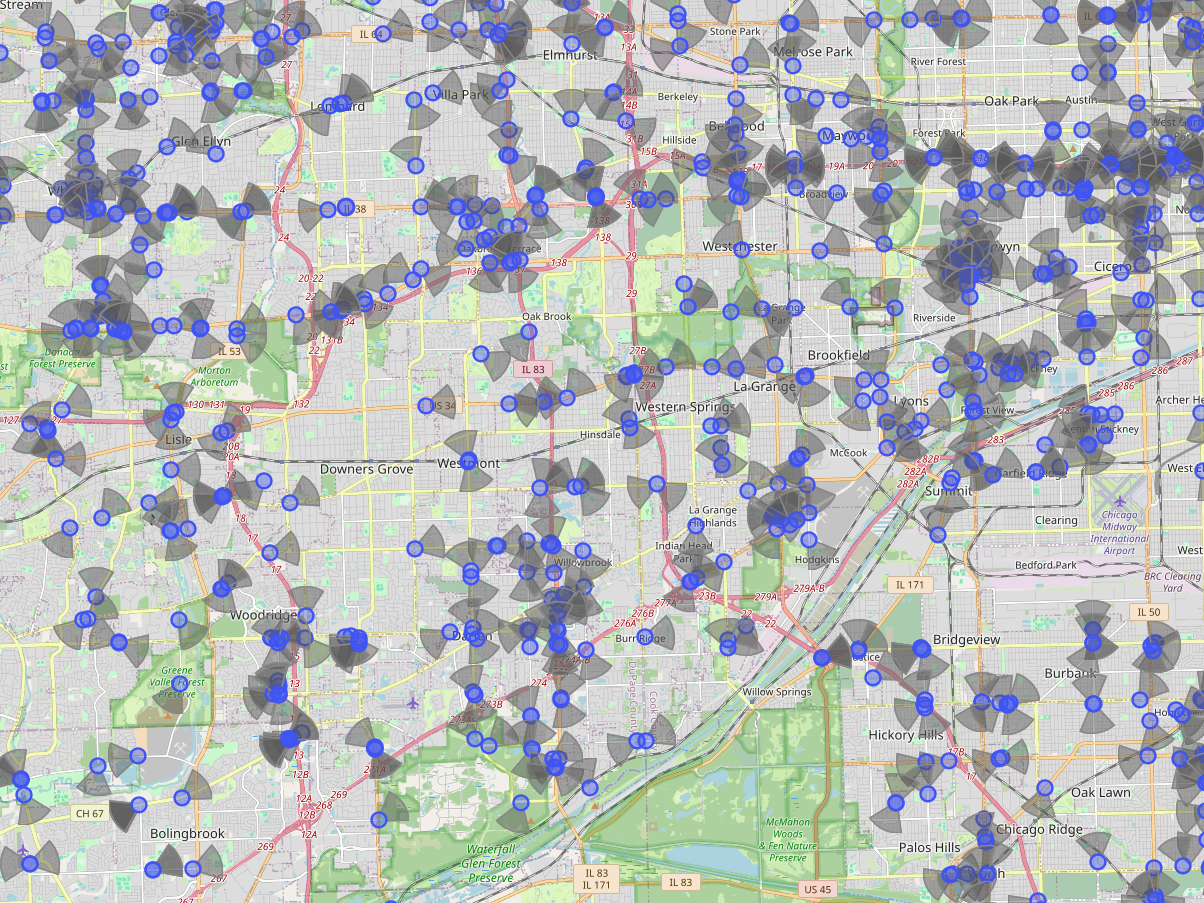 "Flock has never been hacked. Ever. Flock is CJIS compliant. Flock does not share, or resell your data. Nor have we ever."
- Garrett Langley, CEO of Flock Safety - whose cameras can be hacked and who does share data - who thinks efforts to stop their company are "terroristic", in an email to a police chief released by the city (Staunton, Virginia)
The extent of mass surveillance has been growing exponentially in recent years. For example, Flock Safety cameras are everywhere. There are some near your home, and likely more on the way. Before the controversial 2026 Super Bowl commercial, Amazon's Ring worked with Flock, culminating in an increasingly worrying and popular surveillance state (AP, Koebler). They're supposed to be used for law enforcement and ICE, but they are extremely insecure and publicly viewable with the right tools (Jordan, Jordan, Koebler). City and Flock officials frequently abuse their access to the cameras, including by stalking romantic interests and ex-partners or by repeatedly spying on children's gymnastics classes and other community centers before showing the footage to potential customers (Ingraham, Koebler). The cameras are also used to spy on protestors and activist groups (Maass and Alajaji). They also manipulate local governments in to going into contracts with them in ways that benefit the city council members and the company alone, without any citizen input. This includes a city council member quitting his position after being hired by Flock immediately after he voted yes on a contract with the company or when a mayor was hired by them while actively serving as the mayor (Rossmann). To see a map of known Flock cameras, check DeFlock - who Flock's CEO has called "terroristic" (Brewster).
"Uh... yeah, well, I... I don't know... I... I would... I would... um..."- Peter Thiel, co-founder of PayPal as well as US and Israeli government contracted surveillance database tech company Palantir - that works with other big tech companies like Amazon, Microsoft, and NVIDIA - who funded the political campaign for many prominent political figures and groups - including JD Vance and companies like OpenAI and Discord's former age verifier - when asked if the human race should continue to survive (Interesting Times)
Palantir is a company that's been on the rise and in the news a lot lately, yet no one seems to know why. Maybe it's their insane stock prices (Yahoo Finance, Trefis Team). Maybe it's their confusing business model founded on the surveillance of civilians (Haskins). Maybe it's that they work with other basically all big tech companies. Maybe it's that one of their CEOs Peter Thiel doesn't think the human race should continue on (Interesting Times). Maybe it's the other CEO Alex Karp that thinks war crimes should be legal (Wilkins). Maybe it's that they want to bring back the US draft (Hurwitz). Maybe it's them embracing the surveillance state with their very existence just to appease shareholders in general. Hard to say. Thiel and Palantir in general are directly involved in/an investor of lots of entities you engage with often, including OpenAI, Amazon, Anthropic, Microsoft, NVIDIA, Google, Persona, the US government, and much more (Harris, Rosenberg, Waters, NVIDIA, Heilweil, Gioino). Thiel has funded the political campaigns of multiple prominent figures, including JD Vance (Schwartz, Mac and Lerer). Regardless, know that you are almost never alone. Someone could always be watching and/or listening, whether it be a corporation, a government, or a person and whether it be online or in real life.
Artifical Intelligence
 "Y'know, I think AI will probably, like, most likely, sort of lead to the end of the world, but, in the meantime... uh... there will be great companies created with serious machine learning."
- Sam Altman, founder and CEO of OpenAI, the company behind ChatGPT - who thinks the company should be like a religion, allegedly raped his sister, had a whistleblower die under suspicious circumstances, and is "a pathological liar, a manipulative abuser, and his own threat to humanity" (ControlAI)
Big tech has shown that they will knowingly advance AI regardless of any possible ecological or societal issues it triggers (Stanton). Reliance on AI can decrease your brain activity and make you dumber (Kosmyna et al.). AI can cause chatbot-induced psychosis (Caridad). It is a major threat to all creative and artistic people (Saliba and Cho). AI is being used "on an industrial scale" for fraud and scams (Down, Coffeezilla). Google has removed any promise that they won't use AI to inflict harm (Tucker). When AI is used in legal environments, it can lead to errors resulting in the prolonged jailing of innocent people (Henson). Twitter/X's AI chatbot Grok has repeatedly referred to itself as "MechaHitler", said Adolf Hitler is the "best suited to deal with [the] problem" of Jewish people, and has generated child porn right on the open web for all to see at it's user's requests (Hagen et al., Robins-Early). OpenAI had a whistleblower named Suchir Balaji commit suicide with 2 gunshots to the head after he testified against the company in an interview with the New York Times, but before he could formally testify. There are numerous other abnormalities about the case (O'Brien, White, Metz, Epoch Philosophy).
Communities with data centers in unceded Native American lands and in places like Memphis, Tennessee and Newton County, Georgia have non-potable water, unbreathable air, and loud sounds (Goodman and Two Bulls, Harris et al., Tan). See the audio clip below to hear what would be right outside your window, at all hours of the day, if you lived near a data center (More Perfect Union).
See also: You don't hate AI and Dear orgs, please stop using AI
Art

- Game developer Nintendo, who has taken legal/financial action against everyone from a small Costa Rican supermarket to YouTubers to emulators, emulators, and more emulators in addition to much more, on people's ability to preserve and enjoy video games via emulators for games that the company isn't even selling anymore (Lao)
Tech companies have a history of suppressing, discrediting, and replacing art and the artists who make it. Artists are frequently suppressed and censored for their views or methods on social media platforms (Don't Delete Art). Recently, corporations have started outsourcing human creativity with AI (Zhao). Often, companies that own vast media empires don't do their due diligence to preserve and protect the media that only they can legally produce and sell. Examples of this include the deletion of Discovery TV content you already paid for off your Sony PlayStation console, Nintendo's repeated relaxed attitude towards preserving their own games but violent attitude towards others doing it for them, the general shying away from physical media and towards subscription models, Digital Rights Management (DRM) controls, and more (Medina, Bandit, Wikipedia, Alvi, Davies, GOG). Many games get shut down without any support for playing them after their lifespan ends (Stop Killing Games). Big tech discredited, commodified, and delegitimized art while hurting the environment with NFTs (Torres, Zizi, Garnett et al.). OpenAI's Sora threatened creativity and creative autonomy before it was shut down (Lee and White, Brumfiel). Not only do companies not care enough to preserve the art they own, but they go out of their way to target people who take matters into their own hands (Sued by Nintendo, Bailey). Corporate consolidation and licensing agreements threaten existing and future media (González, Roosevelt Institute, Gupta). AI companies utilize destructive methods to collect as much data as possible to help train their models, like with Anthropic's Project Panama (Schaffer et al.).
"Ours is a world in which copyright has fallen woefully behind the curve of what the public actually wants to do with all that digital "stuff" out there."- Mark Hosler, co-founder of the anti-copyright and anti-corporate experimental band Negativland, in a letter to Congress (cameron)
Companies allow the governments of the world to invade the content and art we see and enjoy online on their platforms. Memetic warfare is the utilization of memes as propaganda in order to influence the masses, categorized as a form of psychological warfare, which is said to be a large part of the current political landscape. The United States is currently involved in "exploit[ing] the psychological vulnerabilities of hostile forces to create fear, confusion, and paralysis, thus undermining their morale and fighting spirit" via memes (McBride). Know that nothing is sacred when it comes to your attention, even a thing that seems as innocent as memes.
See also: Nintendo
ID Verification Laws

- Discord announcing all users will need to verify their age in order to continue using the service as before (Discord)
Recently, multiple states, countries, and companies have either introduced or have started working towards ID verification rules that would require you to provide your ID before being able to participate in the web. Mandatory ID verification laws are a massive threat as they give governments and companies the tools to enable censorship, to control what you can and can't see or do, and to track you across the web more than they already do. They basically remove online privacy as a possibility, since everything you do online will be tied to your government identity. They increase your risk of identity theft as companies constantly suffer data breaches, leaks, and hacks (Roach). In the specific case of them restricting minors, this means minors can no longer communicate on a mass scale, express their thoughts and opinions about issues, have their voices heard, or participate in today's culture. This is even more worrying when you add the fact that companies already know more about you than you do about yourself. Now they'll be able to link your digital identity, with all the data they have about you, to your actual identity. Further consider the combination between ID verification laws, the surveillance state, the nonexistence of digital privacy, increasing efforts by governments to censor the internet, and the US's increasing interest in compiling databases of it's citizens who could be problematic (Vesteinsson and Baker, Wise, Martin, Pell et al.). In summary, they mean the days of being private and secure on the internet will be over, as your internet activity and all the data people collect about us will be directly tied to your government ID. Because of this, it is crucial you find more alternatives without verification while being aware of the incoming laws/policies in general (which will be covered on this site).
Australia has already implemented a ban on social media for those under 16, banning everything from Instagram to even streaming like YouTube and Twitch. Other countries are following suit (McGuirk). The US federal government is one of those countries eagerly attempting to pass age verification laws, with the proposed legislation undergoing many transformations and name changes along the way. Most recently, the KIDS Act has been introduced. On top of the standard criteria for an age verification bill, Section 234 says that people under the age of 13 will be unable to use messaging features (Congress). This could mean that if you choose to not verify your age on online platforms, your access to things like DMs could be revoked. It passed the committee on May 5, 2026, meaning it is waiting for its day in the House (Roth). Individual states like Texas and California are also trying to implement or have already implemented their own versions of the laws. Texas Senate Bill 2420, which blocks the downloading of any and all apps without first verifying your identity, would have already gone into affect if it wasn't federally blocked by a judge after Attorney General Ken Paxton was sued by Students Engaged in Advancing Texas (Texas, Nguyen and Simpson, Vasquez). California's Assembly Bill Number 1043 will go into affect on July 1st, 2027 and will require all operating systems and app stores to provide age verification systems (California, Tsukayama, Yee).
Apple has already rolled out verification tools worldwide (Perez). Even Linux users aren't safe (Rudra, Allan). Roblox has already implemented ID verification (Gilbert). Discord recently had a leak of 70,000 ID photos (Chia). Just four months later, they decided to begin to roll out "Teen-by-Default" settings to all users unless you can prove your age with an ID, facial scan, or if their "age inference model" deems you to be an adult (Discord). When hackers investigated into Persona - the age checker invested in by Peter Thiel that's used for platforms like OpenAI, Roblox, and, formerly, Discord - they found the code for the front-end on US government servers, implying collaboration (Open Rights Group, Baes, Owen).
This is all even scarier when combined with the fact that Google will soon ban installing apps from outside of Google Play on Android and will require app developers to verify their ID with Google in order to be able to develop apps on the platform (Google). This initially would've gone into effect at the start of 2026, but after consumer backlash they pretended to walk back the change (Google). Despite claims that Android is going to be free going in to the future fueled by Google's misleading blog post, the change will go in to affect starting in September of 2026 (Keep Android Open). It was just recently announced that now in order to be able to install non-Play apps on your device, you'll need to go through a long and convoluted process involving a one day waiting period (Google, Keep Android Open, Sharma). Not only is this a massive concern for user freedom and privacy, this would also mean it would be even harder if not impossible to not support Google as a company - which is incredibly worrying considering their previously and to be explored ethical failures.
Right to Repair

- Devlin Hartline, senior fellow at a conservative think tank's Forum for Intellectual Property and anti-right to repair advocate, speaking to Congress (Congress, Forbes)
The right to repair is the legal right and movement for consumers to be able to repair and modify products that they purchased. This leads to a reduction in e-waste, as instead of throwing away devices you can simply upgrade or repair them - thus helping the environment. It also has the benefit of giving you control over your device, as you can choose what repairs or modifications you do or don't do and how you do them. It prevents things like forcing you to pay for expensive first-party repairs or bricking your device. Companies shouldn't have the right to tell you what you can and can't do with your own product that you paid for, yet they consistently show themselves to be against the movement. It shouldn't be possible for tech companies to leave a device you paid for unusable like with Spotify's Car Thing or to make it difficult to repair/modify your own devices for no reason (other than to make a profit when you pay them to repair it) (Rogers, Thompson, Kim). Corporations go as far as advocating and lobbying against the right in court (Roth, Green).
Social Impact

- Elon Musk - world's richest person, CEO of Tesla, SpaceX, and xAI, CTO of Twitter/X's parent corporation, former senior advisor to the President of the United States, founder and former head of the Department of Government Efficiency (DOGE), co-founder of PayPal, and notorious bigot - implying that his Nazi supporting and child porn-posting AI Grok will some day "rule" (Ray)
Companies profit off of LGBTQ+ pride while doing little to actually empower those communities, in what is known as rainbow capitalism (Murray, GLAAD). Social media services suppress the voices of their black users (Wiltz). Platforms often do little to combat misinformation, leading to an influx in popularity of pseudoscience and hateful rhetoric - going as far as outsourcing fact checking and content moderation to their own users (Meta, Allen et al., Bond, Duffy). Factual stories take six times as long to reach audiences on social media when compared to misinformation (Vosoughi et al.). Social media continues to lead to addiction (Hillard, Mulugeta, Wortham). Companies continue to cut back on practices that ensure people of all backgrounds have a fair shot while promoting diversity and inclusion of traditionally marginalized groups (Murray and Bohannon). Platforms allow and even themselves post hateful rhetoric against marginalized communities, like with Twitter/X's AI chatbot Grok repeatedly referring to itself as "MechaHitler" and saying that Adolf Hitler is the "best suited to deal with [the] problem" of Jewish people (Dioum, Hagen et al.). Data centers abuse emminent domain, in which governments allow them to take land from owners, in order for the corporations to begin construction (Rowe, Mims, Schulze et al.). AI chatbots assist with suicide and death, for example in the suicides of Adam Raine and Zane Shamblin or in the 2025 school shooting at Florida State University that ChatGPT assisted in (Titheradge and Malchevska, Campbell and Powell, Martin).
Secret Society
,_Terje_R%C3%B8d-Larsen,_Jeffrey_Epstein,_Boris_Nikolic_(advisor_to_Gates)_and_Thorbj%C3%B8rn_Jagland.jpg "Image showing Microsoft co-founder Bill Gates, Norwegian politician Terje Rød-Larsen, Jeffrey Epstein, venture capitalist Boris Nikolic, and former Norwegian Prime Minister Thorbjørn Jagland")
- Jeffrey Epstein, the New York Financier, in an email to the billionaire cousin of the current governor of Illinois, Tom Pritzker (Bouris)
Many tech CEOs are named in the Epstein files alongside oligarchs and politicians from both sides, including but not limited to Elon Musk, Bill Gates, Jeff Bezos, Peter Thiel, Mark Zuckerberg, Google co-founders Sergey Brin and Larry Page, Tim Cook, and LinkedIn co-founder Reid Hoffman (Ruiz, Butts). The Epstein class used their influence to create what 4chan has become today and has been involved in it since (Lawler, Snider, Jones, Winter et al.). Even past Epstein, members of the creep state exist in a separate world to ours. Sam Altman met his husband "in Peter Thiel's hot tub at 3 a.m." (the whole Personal Life section on Sam Altman's Wikipedia page is very interesting) (Hagey).
Control

- Tim Cook, CEO of Apple, referring to the industry where the top five companies have almost half of the industry's $42.208 trillion market share (Stabile, Wallace)
If you decide to switch from corporation-owned services, you will realize that, lots of the time, the non-billionaire-backed alternatives are a lot better. Big tech continues to enshittify their products in order to increase profits (FuckYouTube.lol). Often, the most successful products are claimed to be the best, simply because they have the most users or rake in the most cash. This is often not true, especially when one service becomes so required in modern society that the owners can make it as unusable and as profitable as possible by limiting user's control and ignoring their wants (a monopoly). This only becomes more untrue as platforms continue to enshittify themselves. Not only does switching to non-corporate platforms leave you more ethically sound, but it also allows you to do things like block ads and increase your privacy. When you switch to products that actually care about their users and their experience, it's hard to go back.
Part 2: The Machine
"Corporations must still grow. Money must still be made. The machine must still be fed. That is the way of the world."- Giancarlo Esposito's character, Stan Edgar, in The Boys Season 5 Episode 3 (Kripke)
We can spend as much time as we want going over the reasons big tech companies are bad, but the truth is they aren't unique. Look at any industry and you'll see the same things: pollution, AI, lobbying, you name it. None of them care about their impact on our planetary suicide, let alone the other things like their impact on art. While I do believe it is important to not patronize big tech companies due to these reasons, you can't do that with every industry known to man. So let's fix it.
It's been a while since you've heard or thought much on Greta Thunberg, hasn't it? Remember, the Swedish activist known for her young age and opposition towards climate change? Famous for her "How dare you!" sound bite at the 2019 UN Climate Action Summit? Hopefully you hadn't forgotten about her or the impending doom this planet faces between all the circuses. She certainly hasn't. Something has changed with Thunberg, though, specifically with how the media covers her. It wasn't her goals or her career or her love live that changed the media, and therefore the public's, perception of her, but instead it was the very thing that brought her to the spotlight: her activism. She realized that the same thing caused the climate crisis, the Gaza genocide, the military industrial complex, the rise of AI, and much of the other problems facing the world en masse today: the systems in place (Flakin).
"Some people say that the climate crisis is something that we will have created, but that is not true, because if everyone is guilty then no one is to blame. And someone is to blame. Some people, some companies, some decision-makers in particular, have known exactly what priceless values they have been sacrificing to continue making unimaginable amounts of money. And I think many of you here today belong to that group of people."- Greta Thunberg, political and climate activist, speaking at the World Economic Forum to the global elite attendees (The Independent)
Thunberg hasn't gone anywhere. Instead, she's shifted her focus to the oppression at the hands of the powerful in general. The exact CEOs and billion-dollar corporations causing the climate crisis. She used to be a favorite of the media, now shes barely brought up. If she is brought up, it's either talking about her in a negative light and/or mentioning one of her most recent endeavors supplying aid directly to the people of Palestine, and being promptly kidnapped by Israel in response (Flakin). I had a hard time finding quotes from her due to the amount of hatred towards her that seems to permeate through all news sources; I eventually just had to check out her book for myself at the library. Like her, it's time we shift to the real problems of society, too.
"When the last tree has been cut down, the last fish caught, the last river poisoned, only then will we realize that one cannot eat money."- Unknown
The systems in place have failed us. The companies and the top 1% aren't doing all this evil in spite of the world, they're being rewarded by the world in doing them. They are incentivized to destroy, kill, and profit while being discouraged from doing anything good, unless it can get them some good press or an award. This is a struggle as old as time; weaker people being disenfranchised by more powerful people while being told to hate whatever marginalized group it is that era. The only difference is now we have all the scientific innovation we could ask for, yet when it tells us very clearly what's going to happen and what's at stake, we ignore it. The people at the top only get richer and richer while the people at the bottom and young people face the end of it all. We continue to use the things they sell to us without caring about what other uses the tech and money is going to. If we want to stand a chance at saving our one and only planet, it will take all of us to realize that us the rich and powerful people and systems - along with the politicians from all sides they pay off - are the common enemy to our salvation. These are the anti-(big)-tech, anti-fascist, and anti-capitialist beliefs that Trump is waging a war against (Boguslaw, The White House). There isn't one bad party, one bad politician, one bad CEO, or one bad company, but there is one system.
See also: Anthropocene
"I say, No more. I say, Stand your ground. Our so-called leaders still think they can bargain with physics and negotiate with the laws of nature. They speak to flowers and forests in the language of US dollars and short-term economics. They hold up their quarterly income reports to impress the wild animals. They read stock-market analysis to the waves of the ocean, like fools."- Greta Thunberg from her book "The Climate Book" (Thunberg)
Part 3: The Luddites
"We don't have an "Evilmeter" we can sort of apply - you know - what is good and what is evil."- Eric Schmidt, Former Chief Executive of Google, speaking on behalf of the company - which actively arms the genocide of the Palestinian people, participates in the destruction of out planet via climate change, and helps the US military and ICE "get their work done" (Auchard)
Yeah, we can tell, Schmidt. In summary, if you add up the word counts of Meta's six (general, censorship, privacy, unions, content management, real-name policy), Apple's five (general, environment, censorship, unions, taxes), Amazon's three (general, unions, taxes), Google's three (general, privacy, censorship), Microsoft's, Netflix's, and Spotify's criticism pages on Wikipedia, you get a (very rough) grand total of over 125,000 words (and there are likely more pages I didn't find). That would be about 500 pages in a standard book, or 14 hours of an audiobook.
"I think that you'll also see a lot of companies saying y'know, "here's where we draw the line"... uh... "here's what the policy should be", "here's what we're gonna allow the government to do or not do", and I don't think that's generally the place of Silicon Valley companies."- Palmer Luckey, founder of Oculus VR - now owned by Meta - and military contractor Anduril - that creates autonomous killing drones and missiles while working with Google and the US government - when asked where he draws the ethical lines with his company's actions and what they won't do (Web Summit)
If it wasn't obvious already, corporations have no guiding ethics. They'll often claim they follow fancy sounding goals like "building for everyone" while arming a genocide, "protect[ing] fundamental rights" while using child labor, or generic support of diversity while actively cutting back on support for LGBTQ+ individuals and profiting off their inclusion via pride (Google, Microsoft, Murray, Peralta). They could be spending their billions on fixing issues like world hunger, yet instead they spend it on projects that don't benefit anyone just before scrapping them - like with Meta's abandoned $80 billion metaverse (Ngyuen). They are not beholden to the morals they avoid, the governments they pay off, or the people they trample - they are purely at the will of them and the people and groups around them's greed. The companies we are forced to involve ourselves with constantly couldn't care less about anything you care about. As long as they're making a buck, they (and by extension, the governments of the world) don't care. How can we trust organizations founded on principals of wealth and power with the control of the products and services we use everyday?
"Our philosophy is that we care about people first."- Mark Zuckerberg, co-founder of Facebook (which enabled a genocide in Myanmar), Meta (which currently sells invasive constantly watching glasses with cameras), 5th richest person, whose biggest regret is competing on the fencing team in high school rather than wrestling (Levy)
Hopefully now you can see that you should first assume a corporation is evil and prove that they're good rather than assuming they're good and proving they're evil. Whether they are helping kill our planet, destroying local communities, arming genocides, suppressing activists, fueling the military-industrial complex, bringing about the AI apocalypse, eroding everyone's privacy, making greed the primary motivator of the world, enshittifying, or depriving us of the world that could've been, corporations - and the systems that allow them to exist - do not care about you. It's time you stop caring about them by ceasing to give them any more of your time, money, effort, attention, clicks, or data.
"The next generation is impatient. And they're going to hold us increasingly accountable. And... uh... and I think, y'know, we all need to respond to that."- Pichai Sundararajan, CEO of Google - whose company's carbon emissions grew 48% in the last five years - discussing the environment (Clifford, Planet)
It may seem like there's nothing you can do, but we, the workers and consumers, have the power and the responsibility to change the world for the better. Other than revolting, showing you don't support the way things are going by not supporting the products, services, and companies rooting for our downfall is just about the best we can do. By ceasing to use their platforms, we can create change. This is not a hopeless situation; boycotts do work (Ethical Consumer). By acknowledging and then hopefully defeating the pain and suffering corporations and systems can, will, and do cause, we can be a more ethical, empathetic, and thoughtful society and people.
In industrial revolution England, there was a group called the Luddites. Fed up with conditions of the time including pollution, child labor, low wages, and unsafe working conditions, they physically raged against their machines by destroying the tech that made it all possible. They were not anti-tech, they were anti-oppression. Faced with many of the same concerns and them some today, we are due for new ones. In case there is any confusion, I am not anti-tech - just anti-capitalist.
"The next great division of the world will be between people who wish to live as creatures and people who wish to live as machines."- Wendell Berry, environmental activist and farmer, from "Life is a Miracle" (Berry)
Without further ado, lets get into what you're likely here for: how to block ads and increase privacy.